


Fly Fishing Gear | Nymphs
From the legendary Copper John to the fan-favourite Pink Tag Jig, we range a fantastic collection of Fulling Mill and Category 3 nymphs, suitable for use in our local area, around Australia and next door (New Zealand).
WHAT IS A NYMPH? A nymph is a type of fly designed to imitate the aquatic larval stage of insects. Unlike dry flies, which float on the water's surface, nymphs are meant to sink below the surface, mimicking insects that drift or crawl along the bottom of rivers and streams. Nymphs are effective for catching fish that are feeding on subsurface prey, making them a key tool in many fly fishing scenarios. WHEN TO FISH NYMPHS Nymphing is particularly effective in situations where fish are focused on subsurface prey rather than surface insects. Nymphs are a go-to choice when you observe that fish are not actively feeding on or near the surface, which can be common in periods of low insect hatch activity. Their ability to imitate the aquatic larval stage of insects makes them suitable for catching fish that are foraging close to the bottom which makes them an effective choice in all seasons. In terms of water conditions, nymphs are versatile and can be effective in a range of environments. They are well-suited for both moving and still water, particularly in deeper pools, runs, or areas with a slower current where fish are likely to be holding close to the bottom. Nymph fishing is also beneficial in murky or stained water, as these flies can still attract fish even when visibility is reduced. By fishing nymphs, anglers can effectively target fish that are feeding in the subsurface layers, which is crucial for successful fishing when surface activity is minimal. WHAT IS AN IDEAL NYMPHING SETUP? For an ideal nymph setup, the rod, line, leader, and tippet all need to be carefully chosen. A rod suitable for nymph fishing typically has a weight range from 4 to 6. Rod lengths usually range from 9 to 11 feet for nymph fishing, with longer rods being favored for techniques such as Euro nymphing, which requires greater control and sensitivity. The line used for nymph fishing is often a weight-forward floating line or a dedicated nymphing line with a specific taper. For Euro nymphing, a specialized line with a thin diameter and high visibility is commonly used, which helps in detecting subtle takes and maintaining control over the drift. Leaders for nymph fishing are generally longer and heavier than those used for dry fly fishing, ranging from 9 to 15 feet. A tapered leader helps with turnover and ensures a smooth presentation, while for Euro nymphing, a level leader with a fine diameter is often used to maintain sensitivity and control.
Tippets are crucial in connecting the leader to the nymph and should be chosen based on the size of the nymph and the target fish. For nymph fishing, tippet sizes typically range from 4X to 7X, with lighter tippets being used for smaller nymphs and delicate presentations. In Euro nymphing, the tippet is usually thinner to enhance sensitivity and detect subtle strikes. If you have a particular nymphing setup in mind but would appreciate some additional advice. Simply get in touch with our friendly sales team – they’re always up for a chat. You can contact us by calling our Tumut store on (02) 6947 4062 or by email.
Click here to read more...
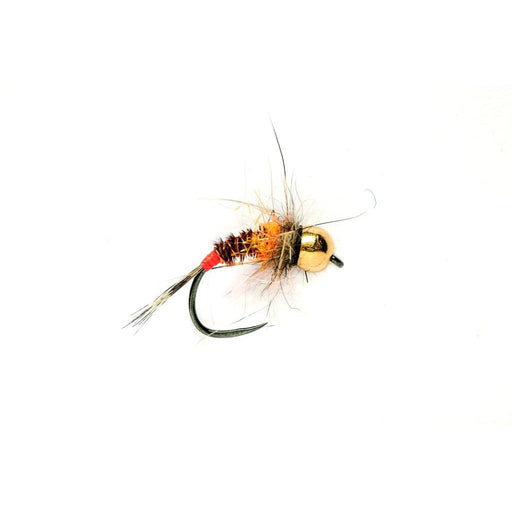
Fulling Mill Barbless Tungsten Andrzejs High Visibility - Nymph
Fulling Mill
Original price
$4.20
-
Original price
$4.20
Original price
$4.20
$4.20
-
$4.20
Current price
$4.20
A highly visible barbless fly that features a tungsten bead to help get your fly right down to feeding fish fast. Here at Tom's Outdoors, we know a...
View full details